Who has to fix a broken sidewalk in NYC?
The property owner does.
In New York City the owner is responsible for maintaining, repairing and installing the sidewalk next to their property. That stays true no matter what caused the damage.
Got an NYC DOT violation notice? You have 75 days from the date on it before the City can do the repair itself and bill the property. --days:--hrs:--mins left before the City can do the repair itself and bill the property. left The City can now do the repair itself and bill the property. It is not too late to get ahead of that.

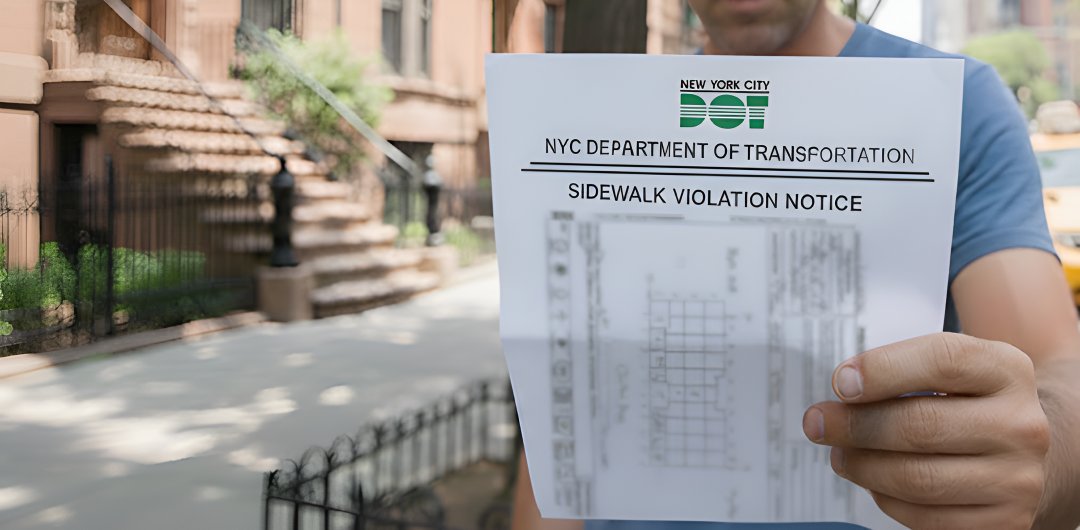
If you own a property in New York City and got a notice about a damaged sidewalk, this page is for you. A broken sidewalk can mean fines, trouble selling or refinancing, and risk to anyone walking nearby. We explain what a New York City Department of Transportation (DOT) sidewalk violation is, why it matters, and how you can get it resolved easily with the right help. Eden Pro Contractors aim to make it clear, simple, and stress‑free.
We also show you how our company can handle the problem from start to finish. You do not have to worry about permits or confusing rules.
The six things property owners ask us most. Every answer below comes from the City’s own published rules, and the full list with sources is further down this page.
A DOT sidewalk violation is a formal notice from the city. It says the sidewalk next to your building is unsafe. The notice may mention cracks, uneven slabs, slopes, broken concrete, sinking sections, or other hazards.
A violation means that sidewalk flags, the slabs of concrete that form the walking surface, are damaged or out of place. The city marks them as a “trip hazard” or “defect.” That puts responsibility on the property owner to fix.
A violation is more than cosmetic, it shows the sidewalk fails local safety standards. Fixing it restores safety for pedestrians and protects you from fines or future liability.
We can review your DOT violation and explain your next steps with clear guidance.
Under city law, property owners must keep the sidewalk next to their building in safe shape. The relevant codes are New York City Administrative Code § 19‑152 and New York City Administrative Code § 7‑210.
That includes homeowners of 1‑3 family houses, apartment buildings, condos, and business properties. In most cases, even if you do not use the sidewalk daily, you are responsible.
There is one narrow exception. If the damage was caused by a city tree root and the tree belongs to the city, a special city‑help program might apply. But that rarely covers full repair. For most owners, the responsibility remains.
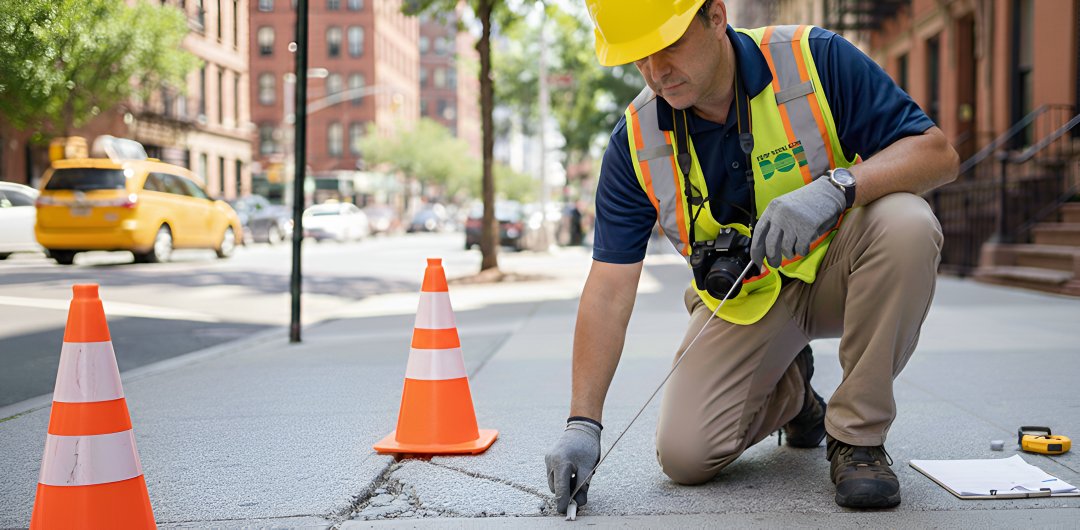
DOT may inspect sidewalks on a regular schedule, or after someone files a complaint, or following a hazard report. If DOT finds damage, they issue a “Notice of Sidewalk Violation.” Here is what happens next
The notice includes details like your address, date issued, slabs flagged, and instructions for repair.
Ignoring a DOT violation can lead to several serious consequences. First, DOT may hire a contractor themselves to fix your sidewalk. Then they bill you for the work. The bill goes to the New York City Department of Finance If you still don’t pay, the city may place a lien on your property. That can block your ability to sell, refinance, or borrow against the property.
A lien may stay until you pay the city plus fees. Many lenders or buyers will refuse to move forward until the lien is cleared Besides financial risk, you leave your sidewalk unsafe. That increases your liability if someone trips or gets hurt near your property.
Fixing a sidewalk violation may seem overwhelming. But if you follow clear steps, it becomes simple and manageable. Below is how Eden Pro Contractors handle the process for you.
Step 1: Call us for a free inspection. We walk the sidewalk with you, check all slabs, and compare with the DOT sketch.
Step 2: We draft a plan showing exactly what needs repair or replacement.
Step 3: If required, we apply for the needed permit from DOT or local building department.
Step 4: We carry out the repair using quality concrete, correct slab dimensions, proper level grading, good drainage, and clean finishing. We respect both city rules and neighborhood appearance.
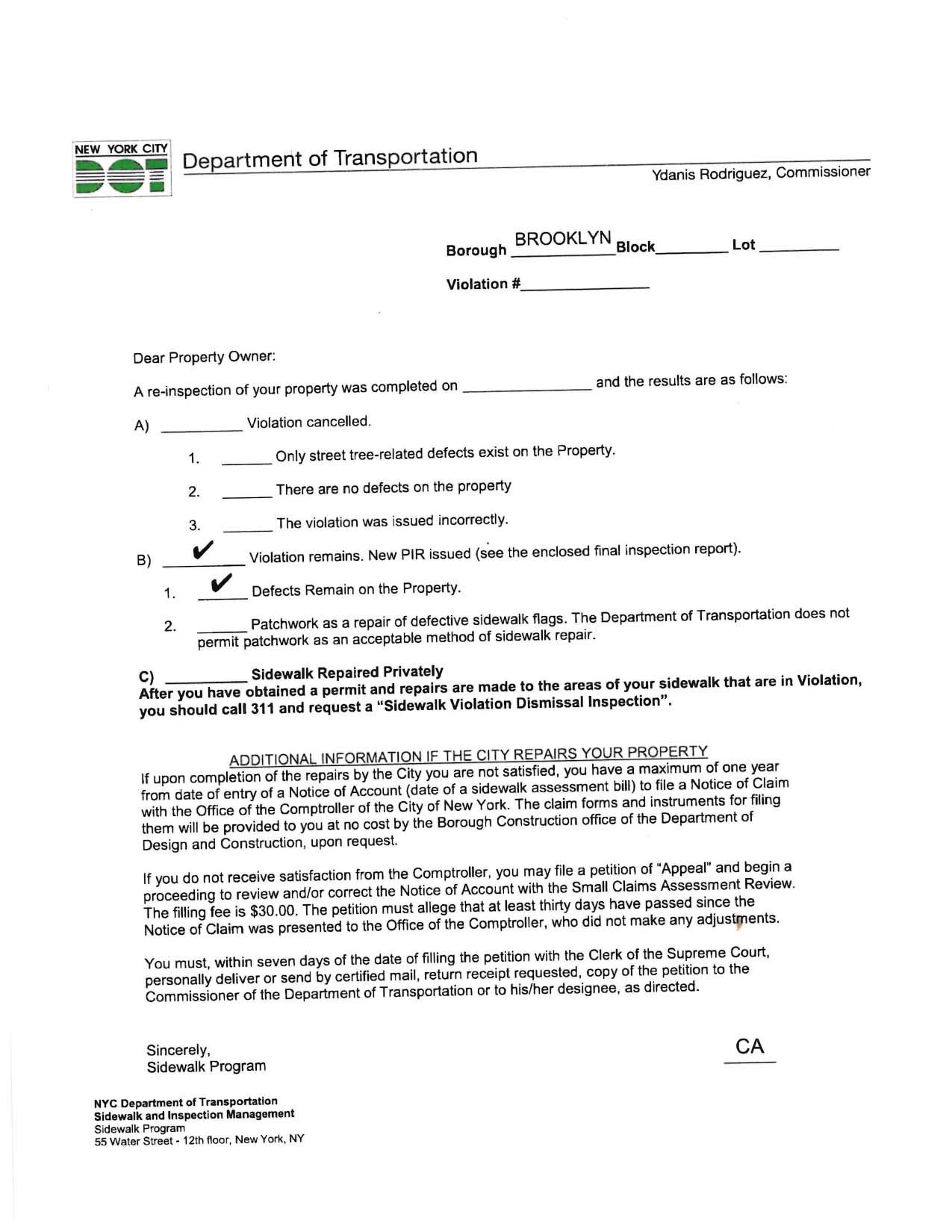
Step 5: After repair we help you schedule a “dismissal inspection” via 311 or DOT so the violation can be officially cleared.
Step 6: We hand over all paperwork, receipts, and inspection confirmation so you have a record.
With us managing every step, you avoid confusion about permits or compliance. You get a safe sidewalk and a clean record.
Repairing a sidewalk is not always easy. Here are common issues we handle for you
Permit delays. Sometimes DOT or local offices take time to issue permits. We track the process and follow up to keep things moving.
Cost surprises. Hidden damage under slabs can lead to extra cost. We provide transparent estimates and discuss possible surprises upfront.
Tree roots or old sidewalks. Roots or historic bricks complicate repair. We assess carefully and propose solutions like root guards or slab replacements.
Improper repairs by others. Some repairs patch rather than fully fix. That can cause repeated violations. We use proper concrete slabs and correct leveling so the fix lasts.
Inspection or paperwork mistakes. A small error can delay dismissal. We triple‑check all documents, coordinates with DOT, and make sure details are correct.
With our experience and care, we deal with these roadblocks so you do not worry about them.
Fixing a sidewalk properly requires knowledge of DOT standards and building codes. Here is why working with Eden Pro Contractors makes sense:
You get peace of mind and a safe sidewalk that meets city requirements.
Let Eden Pro Contractors handle inspections, permits, and repairs so you stay compliant.
Thirteen questions, answered short first. If you only read one thing, read the deadline.
The property owner does.
In New York City the owner is responsible for maintaining, repairing and installing the sidewalk next to their property. That stays true no matter what caused the damage.
75 days from the date on the notice.
The clock starts the day the Sidewalk Violation Notice is issued. It is not a reminder date. It is the deadline.
The City can do the work and send you the bill.
If the repair is not done in time, the City may repair the sidewalk itself and bill the property. An unpaid bill can turn into a lien, which then shows up when you sell or refinance.
Yes. A DOT sidewalk construction permit is required before work starts.
The contractor pulls it under their own licence. You do not file it yourself.
Yes, for any job over $200.
Work above $200 needs a Home Improvement Contractor licence from the Department of Consumer and Worker Protection (DCWP) to be legal in New York City. Ask to see it before you sign anything.
Small things count. A half-inch lift is enough.
Inspectors write up trip hazards where flags are raised as little as half an inch, holes from about an inch across, cracked or loose sections, concrete with a void underneath it, a slope that sends water the wrong way, and hardware sticking up above the surface.
For 1-, 2- and 3-family homes, usually not.
The City no longer issues violations for sidewalk damage caused only by a City tree at 1-, 2- and 3-family homes, and it cancelled existing violations and liens in those cases. Commercial buildings, co-ops, condos and properties with four or more units are not covered.
Sometimes, through the Trees and Sidewalks Program.
It covers 1-, 2- and 3-family owner-occupied homes that are not used commercially. Ask 311 or NYC Parks for an inspection. The site is scored from 1 to 100 on things like how far the flag has lifted, how many flags are damaged, how busy the footway is and how healthy the tree is.
90 and above gets scheduled. Under 80 does not.
A score of 90 or more is expected to be repaired within about three years. Between 80 and 90 the site is waitlisted and depends on funding. Under 80 it will not be repaired by Parks. A site is only inspected once every three years, so waiting has a real cost.
Source: NYC Parks: Sidewalk Repair
You can file a claim within 90 days of the repair.
Claims go to the NYC Comptroller. Approval is not guaranteed, so keep the permit, the invoice and photographs.
A dismissal inspection has to be filed after the work.
Once a licensed contractor finishes, you submit a sidewalk violation dismissal inspection using your violation number and the construction permit number. DOT re-inspects and closes the file. Skip this step and the violation stays open even though the concrete is new.
Yes, within 75 days of receiving the notice.
DOT then schedules a re-inspection within 180 days, carried out by a different inspector than the one who wrote it up.
Eligible residential owners can ask for a payment plan.
If DOT has billed you for a repair it carried out, ask about an instalment plan rather than letting the charge sit unpaid.
We do not paraphrase second-hand blog posts. Everything on this page traces back to a City page you can open yourself:
Written and kept current by the Eden Pro Contractors field team, who pull NYC DOT sidewalk
permits and file dismissal inspections as part of the job.
25 years working on New York City sidewalks.
Last checked against the City’s published rules on
.
This page explains the rules in plain English. It is not legal advice. For your own case, check the City pages linked above or call 311.
If you have a DOT sidewalk notice, the first step is simple. Walk the sidewalk with your notice sketch and compare slabs.
Then contact Eden Pro Contractors for a free inspection. We will look over the sidewalk, check what needs fixing, and explain next steps clearly.
If you agree, we will handle the permit, repair work, inspection scheduling, and paperwork.
Getting on it early can often save you from fines, liens, or sale trouble. A quick call can make the process smooth.

We aim to give you safe, code‑compliant sidewalks that meet DOT standards. We treat your property with respect, clean up after work, and make sure final inspection goes smoothly.
If you trust us, you avoid stress, paperwork, and mistakes. We deliver results that keep your property safe and marketable.
Contact us anytime to schedule a free consultation, get questions answered, or start the repair process.
Let us help you turn a DOT violation notice into a smooth, worry‑free fix.
Before you close this page, get our Free 3-Minute NYC Violation Risk Audit. Enter your address, and our compliance desk will check if your ticket risks escalating to a title search block.
(No spam, strictly compliance)