
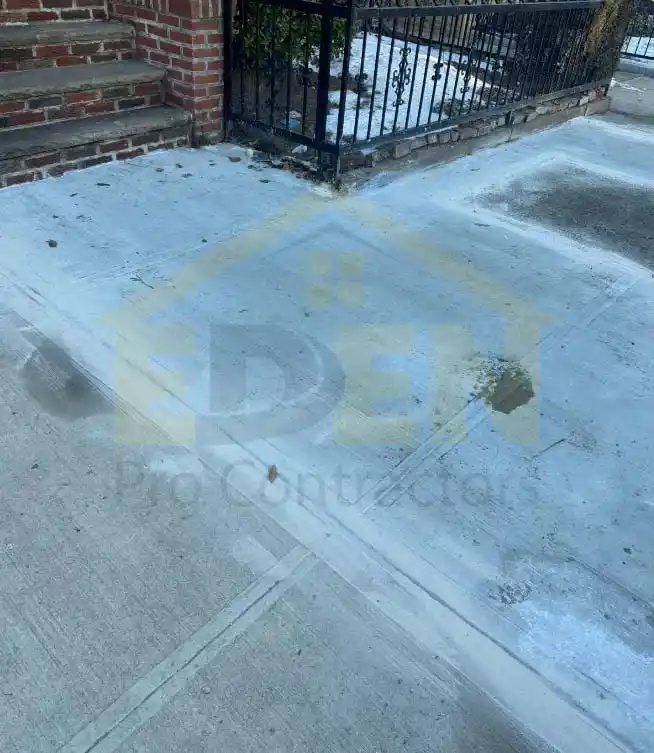
Who is Responsible for Sidewalk Repair in NYC?
If you live in New York City, you’ve probably seen cracked or uneven sidewalks before. But when it happens outside your home or shop, the big question is, who has to fix it?
According to the New York City Administrative Code §19-152, the property owner is responsible for keeping the sidewalk in good condition. This means if the sidewalk in front of your property is cracked, uneven, or broken, you are legally required to repair it.
The city made this rule to make sure sidewalks are safe for everyone. Broken sidewalks can cause people to trip or fall, and that can lead to injuries or even lawsuits.
So, while the city owns the sidewalks, it’s the property owner’s job to maintain them, the goal is to keep all sidewalks smooth and safe.
Does the City Ever Fix Sidewalks?
The one exception You Should Know:
Most of the time, the property owner must handle sidewalk repairs, but there’s one major exception.
If your home is a one-, two-, or three-family house that you own and live in, and the sidewalk is damaged by tree roots from a city-owned tree, then the City of New York will fix it at no charge.
This rule exists because large city trees often break sidewalks through no fault of the homeowner. The City’s Tree-Related Sidewalk Repair Program covers these specific cases.
But remember:
- If your sidewalk is cracked for any other reason like water, age, or settling, you must repair it yourself.
- If you rent out part of your home, you may lose that exemption.
You can check your eligibility or request repairs by calling 311 or visiting the NYC Parks Department website.
Who Pays for Sidewalk Repairs at Rental or Commercial Properties?
If you own a multi-family rental building, an apartment complex, or a storefront, you are 100% responsible for fixing the sidewalk in front of your property.
This includes:
- Filling cracks or holes.
- Replacing uneven or lifted slabs.
- Clearing snow, ice, and debris.
The NYC Department of Transportation (DOT) regularly inspects sidewalks and issues violation notices if they find unsafe conditions. Once you receive a notice, you have 75 days to repair the damage.
If you don’t, the City will hire its own contractor to fix it and send you the bill (usually at a higher rate). They’ll also add the cost as a lien on your property taxes, which can cause future financial trouble.
Tip: Fixing small issues early can save you thousands later and prevent injury-related lawsuits.
What About Condos and Co-ops?
Shared Buildings, Shared Responsibilities.
If you live in a condo or co-op, the rules work a bit differently.
For condominiums, the Condo Association (HOA) usually manages sidewalk maintenance as part of the shared property.
That means:
- The board or property manager hires licensed contractors.
- The costs are paid through monthly association fees.
- Every unit owner contributes equally to shared repairs.
For co-ops, the co-op board handles all common areas, including sidewalks. Repairs are funded through the building’s maintenance fees or a one-time assessment if the damage is major.
If you’re unsure, check your condo or co-op bylaws. Some documents list who’s responsible for exterior areas like sidewalks, driveways, and entryways.
What If You’re a Renter?
Do Tenants Ever Have to Pay for Sidewalk Repairs?
If you rent your home or shop in NYC, the answer is usually no, since the sidewalk repair is the landlord’s responsibility, not the tenant’s.
However, commercial tenants (like stores, restaurants, or offices) should read their lease agreement carefully.
Many leases include a “sidewalk maintenance” clause requiring the tenant to:
- Keep the sidewalk clean and clear.
- Remove snow or trash.
- Fix minor issues caused by their operations (like cracks from heavy equipment).
If you’re unsure, ask your landlord or review your lease before you sign. For residential tenants, the landlord is almost always responsible for any major repair.
Who Fixes Sidewalks Near City Property?
When the sidewalks are next to the public buildings or spaces, the government agency that owns the property is responsible for maintaining them.
Here’s how it breaks down:
- The NYC Parks Department repairs sidewalks near city parks or green spaces.
- The NYC Department of Education (DOE) handles sidewalks near public schools.
- NYCHA (Housing Authority) maintains sidewalks around public housing.
- MTA or DOT may handle sidewalks near subway entrances or bridges.
So, if a city park’s sidewalk is cracked, the Parks Department, not you, must fix it.
What About Corner Properties?
Double the Space, Double the Responsibility
If your property sits on a corner lot, you are responsible for both sides of the sidewalk that border your land.
That includes:
- The front sidewalk along your main street.
- The sidewalk along the cross street.
So, if you own a corner house, store, or apartment building, you must inspect and maintain both walkways. Ignoring either side can lead to two separate violations.
What If a Tree Damages the Sidewalk?
When Nature Becomes a Problem
Tree roots are one of the biggest causes of sidewalk damage in NYC. They lift slabs, create bumps, and sometimes even break the concrete completely.
Who fixes the sidewalks when a tree is the culprit?
- If the tree is city-owned and your property is a 1-, 2-, or 3-family owner-occupied home, the City will likely repair it.
- If your property is commercial, a rental, a condo, or a co-op, you must repair it, even if it’s a city tree.
You can still contact 311 to confirm ownership of the tree or request inspection. Never try to cut or remove a city-owned tree yourself, as it could result in costly fines.If you’re facing this issue, here’s a helpful guide on fixing sidewalks lifted by tree roots.
Conclusion
Even though NYC technically owns the sidewalks, it’s almost always the property owner’s duty to maintain them. Keeping your sidewalk in good shape is more than just following the law, but it’s about making your neighborhood safe and welcoming for everyone. No matter what kind of property you own, regular sidewalk maintenance helps prevent accidents, saves you from costly repairs later, and improves your property’s overall appearance.
If you ever find damage or aren’t sure how to handle it, reach out to us today. Our team will guide you through the repair process and ensure everything meets city standards.